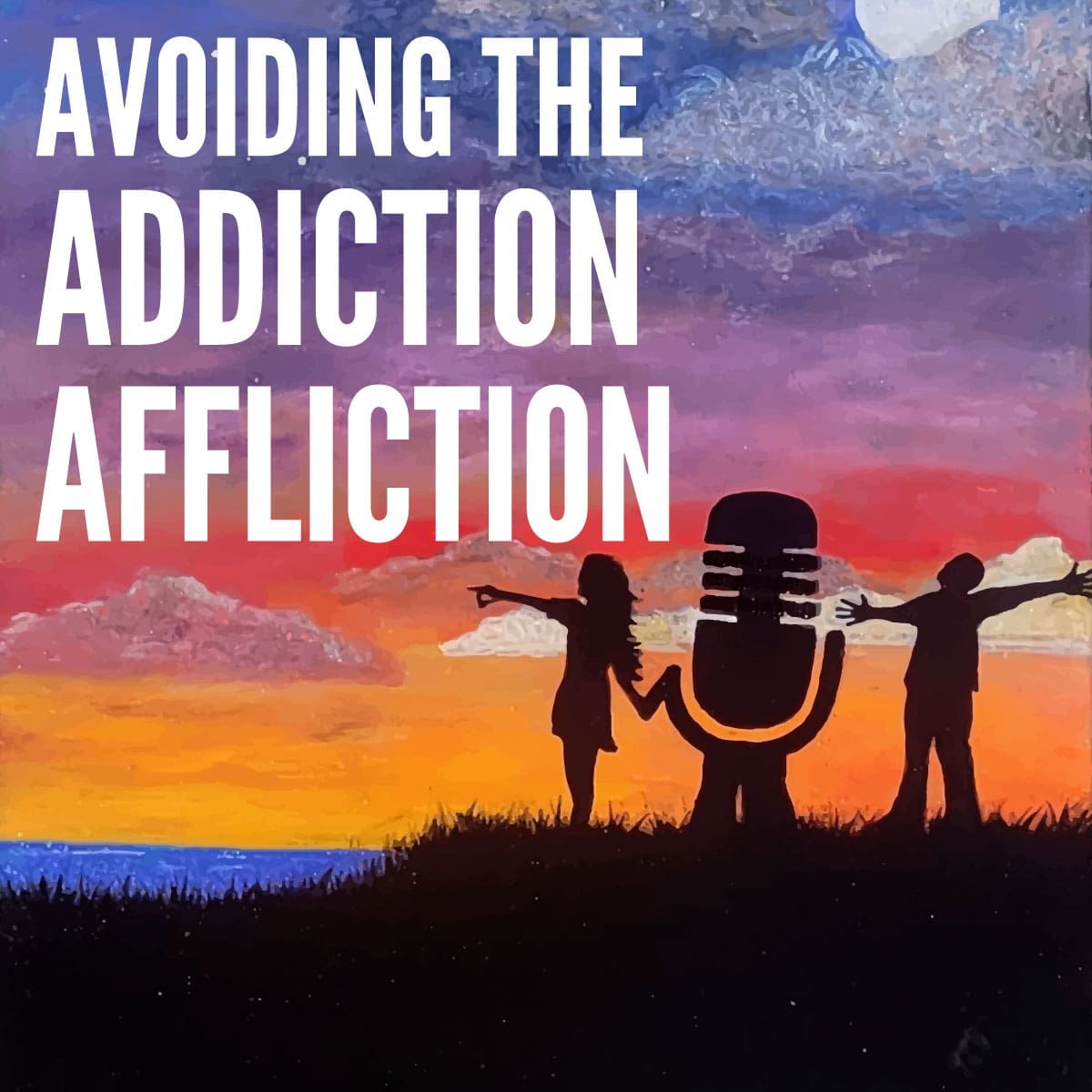
When does it stop being a party and start becoming a problem? Is there a way to steer clear of addiction?
Every Wednesday, Mike McGowan explores substance use disorders with expert guests.
The World Deserves Your Gift
Host
Mike McGowan
Guest
Harvie Herrington
Motivational speaker, trainer, and author
Harvie Herrington is a former college and pro football player now dedicated to helping youth and adults overcome adversity and achieve their dreams. He is a motivational speaker, trainer, and author. His inspirational presentations focus on diversity, self-leadership, overcoming adversity, and metabolic health. His book, “80/20 Rule: Removing the Friction From Your Life to Become a Better Athlete,” discusses the physical and mental dedication it takes to succeed. Harvie’s contact information is at Keynote and Motivational Speaker – Harvie Herrington.
The State of Wisconsin’s Dose of Reality campaign is at Dose of Reality: Opioids in Wisconsin.
More information about the federal response to the ongoing opiate crisis can be found at One Pill Can Kill.
[Upbeat Guitar Music]
Mike: Welcome everybody. This is Avoiding the Addiction Affliction, brought to you by Westwords Consulting, the Kenosha County Substance Use Disorder Coalition, and by a grant from the State of Wisconsin's Dose of Reality Real Talks reminding you that opioids are powerful drugs and that one pill can kill. As always, I'm Mike McGowan.
Mike: You all know I speak to people, especially young people, and one of my goals when I talk to them is to get them to take charge of their own life so they don't look back later and wonder, "Ah, what if". I'm certain that I share that goal with my guest today, Harvie Herrington. Harvie is a former college and pro football player now dedicated to helping youth and adults overcome adversity and achieve their dreams.
Mike: He is a fabulous motivational speaker, trainer, and author. So glad you could be here. Welcome Harvie.
Harvie: Hey, thank you so much, brother. I appreciate you having me.
Mike: Well, I was really excited to do this too. Harvie, I'm gonna quote your webpage, which we link, of course, we always put links on our podcast.
Mike: It says, when you speak, you answer the tough questions about diversity, self-leadership, overcoming adversity, and metabolic health. We're gonna talk about all those, but let's start with self-leadership. Some people just wait for others to lead them.
Harvie: Yes, they do. Most people.
Mike: Yeah, you didn't.
Harvie: No, I didn't.
Harvie: But my story's unique because I didn't know that I was leading myself. That's how I became a speaker after processing my life. And truthfully, it happened in my late twenties. I was out in New Jersey playing pro ball, and I just start wondering, how did I make it. It occurred to me that I was being voted as a captain and realized that I hadn't been raised to be a captain, a leader.
Harvie: Starting in high school, community college, Western. Not in the NFL, because I never really played in the NFL, I was on those two teams with two injuries with both of them. But everywhere else I played, I was voted as a captain and it never occurred to me because I was just chasing after that dream. So that's what led me down this speaking path.
Mike: Amazing. I watched a short video you posted where you were driving home on the first of the month after visiting a big box store and you were commenting on people's attitudes and work ethics that you saw. And what's interesting to me, Harvie, is there's a big difference between wanting to work someplace and feeling like you're settling to work someplace.
Harvie: Oh, yes.
Mike: Some people just settle for what they could be.
Harvie: They do. But here's my but to that. From my experience, the way I was raised, where I grew up, and all the people I've worked with coaching for 18 years, a lot of people aren't taught how to be more.
Mike: Correct.
Harvie: Systems, communities, families, environment dictates a lot of that in people. And then they get caught up in that.
Harvie: I'm gonna write this book someday, and a part of my brain says, you can't name it this, bro. You can't. But I feel like this is the right title. Pigs Don't Know Pigs Stink.
Mike: (laughs) I love that. Why would you name it that?
Harvie: Because somebody's gonna say, that's so offensive. (laughs)
Mike: Maybe.
Harvie: But I just wanna raise my point.
Harvie: One of my many objectives when I go to a school or some social group is to expose people to their environment. To the if a pig doesn't know how dirty its environment is, unless you take 'em out and clean 'em up for a few months. So that's one of my main objectives. We just get caught in it. Again, I look back, how did I do this and my brother and sister did not, and I'm the oldest.
Harvie: I had it the worst, right? So how did I, and it's because I think that's a gift God gave me is I knew my environment stunk. I don't know why I knew it, I did, but I know most people don't know it.
Mike: But, okay, because I'm the same way. My environment was awful. I've talked about it here before or it wasn't great.
Mike: You had to have had something, you had to have gotten something that your brother and sister didn't get.
Harvie: Yeah. Yeah. That was it. I knew that life wasn't supposed to be that way, and I can't tell you, I recall meeting anyone in my pig pen that knew that. I just knew I knew I was supposed to have a dad.
Harvie: I knew life was supposed to be better. I knew and they say, on the grass is greener on the other side. I knew that I belonged on that other side of the fence in so many aspects of my life.
Mike: Was that self-leadership or did you have somebody on the other side of the fence going, get over here?
Harvie: No, I didn't have anybody. It was again, the title of my talk to all students is The Power of a Dream,
Mike: Right.
Harvie: My dream was to play high school football, and it really, it didn't have a beyond. In my childhood from, let's just go back to four years old, to how old are you when a freshman, 14, 15 years of age.
Harvie: I knew that journey, what was gonna happen for me freshman year and I, and that was I was gonna play football. That was what led me. So how did I get voted as a captain? I worked out hard. Because I wanted to play football and my peers saw that and they didn't do it. So they said, we better vote this guy in to be one of our leaders.
Harvie: So I learned leadership by just focusing on self.
Mike: Were you surprised after high school when you got an opportunity to play after that?
Harvie: No, I had no idea. I always talk to people about goals, short, medium, long-term goals. I was just chasing short-term goals. Freshman year I knew I was gonna play, then I got a bad injury freshman year in high school. But I went after coming from the hospital that night, the next day I went to the weight room and work out, because I was planning on next season. And that's how my life went until it slowed down enough for me to start processing it. I just chased that one thing and I knew what I needed to do for that one thing and I didn't...
Harvie: I was blessed to... i'm a Christian, in my faith, I follow the red letters. I was blessed that God also probably blocked for me a lot. That I never used that term. Lord have mercy. That's a good one, right?
Mike: That is a good one.
Harvie: God was lead blocking for me and he kept me away from a lot of things that my environment was trying to entrap me in.
Harvie: And that allowed me to just focus on that thing freshman year through high school. Then senior year, my PE teacher and principal said, you should go to college and play football. That's the next small goal. That's how my life went. All the way through, all the way into the NFL and beyond.
Mike: That reminds me then of your Facebook post. You have a Facebook post that says, most people think success is built in big moments. It's not. It's built in small decisions. Explain that a little bit more.
Harvie: We focus too hard on Mount Everest. And there's a journey to climb Mount Everest, and you gotta focus on each piece that you gotta put together.
Harvie: It's not a puzzle. It goes A through Z to get to Mount Everest. You focus on those things, the small goals. Mount Everest is too big. It's too far away. Even when you start to see it, it's still too far away. So we get caught up. I was just on the phone with someone also talking about stress and then our story about the golfer.
Harvie: We get caught up in the big stressful things and then we lose sight of the small little piece that has to be put in there. You gotta work out every day. You gotta eat right every day. You gotta sleep right every day. Those little things, when you focus on, I never focused on the NFL. It didn't become a thing to me until the end of my junior year when the Browns sent me a letter and it was in my mailbox.
Harvie: I never dreamt, there's no way I could that kid from that pig pen dreamt to playing professional football. It never occurred to me until I received a letter my junior year.
Mike: And then were you surprised?
Harvie: Yeah. (laughs) Yes. Yeah, I have to say, yeah, because I took that letter and ran back to my head coach and said "Coach look at this orange helmet on this white, you know." And he said, "Dude, you're a good football player."
Mike: That's awesome.
Harvie: Yeah. Yeah. But I was I never focused, no one ever taught me to focus deep into the future.
Mike: No it's one thing taking it one step at a time. You don't start out benching your max, right?
Mike: You gotta build up to it. But let's talk about adversity because you talk you hit on it a little bit. Injuries is one thing. And for somebody who plays at a high level like you did, you're gonna be injured, right? So overcoming that is one thing, but talk about the mental discipline it takes to overcome that adversity.
Harvie: I am probably gonna say this, where people will be like, how? I.. loved... that game so much that it didn't matter what injury I had. I felt it break in a game. I broke the fibula, the small bone. So its non-weightbearing, I felt it snap. I knew it broke and I did everything I could to stay on that field because I knew it was over because I felt it break.
Harvie: There are so many ways to overcome adversity. But I believe one of the main things is you've got to love the purpose of it. So I'll give an example, and I did a video. I haven't posted it yet today. When I'm home, when I'm in town and I'm not traveling I work at our schools locally so I can see my kids and I just love staying relevant, being around the students.
Mike: Yep.
Harvie: I had one of my employees call and quit. Outta nowhere. And I was stopping at the post office when we were messaging, and I was like, this text doesn't feel right. So I just called her and I could hear it. I was like, no. So I do all of that. I'm in the post office, I come back out and I'm like, this is what it's about.
Harvie: This is the hard part. This is the painful part. This is the part that do you just say, oh no, Lord, again or do you do the work to go get another person? Because I can't let that get in the way of my journey. So it, it's a love and a passion. I didn't have the training. Now I can give people the training that it takes to get there.
Harvie: My piece of it was, I loved it too much. This happened, I don't know if you can see that.
Mike: Oh ya.
Harvie: This scar happened week six, freshman year, my first year of playing football. This skin that's here used to be down here and up here. We were, I'm old enough, right? The helmets were metal, but they had rubber coating on it,
Mike: Right.
Harvie: I, for my guess is I forearm shivered a guy I'm running down on kickoff and the corner of his helmet caught it, cut, it pinched it, took it all out. I could see down through my bone. And that, it just it tore all of that. That's my first injury. And never once did I not think, I'm never gonna play football again.
Harvie: I tell it in my talk, I went into shock. I can remember it, I can remember my hearing coming back and the trainer's holding my arm. I got a toilet paper roll on it, and I'm looking past her, out at the guy's playing, and I looked up at her and I said, Hey, can I go back in? But see, again, I didn't know this.
Mike: Right.
Harvie: I didn't know this about myself. And her words were, "No fool, we got an ambulance coming." All of that was missing. It was hanging from the kid's helmet. That's how bad it was. And that's, but that's how much I loved something. That's how much that love for that and it gave me that love back, that's just how I was wired.
Harvie: The next day, so many of my friends, "Oh, you're never gonna play that rough game again." Are you kidding me? I went to the gym and worked on my legs that day, the next day, but I still had no idea what I, most people, if you get the right information, that gives you purpose and guidance and the direction, I had none of that.
Harvie: When I tell you none of it, zero. I don't even share most of the things from stage that I went through as a child. (laughs)
Mike: Yeah. I've heard you say also, and this goes to what you just said, the world deserves your gift. Everybody has one. Clearly your love of that, your passion was one of your gifts.
Mike: How do you use your gifts to overcome obstacles?
Harvie: If you figure out what your gift is, it'll help you overcome the obstacles. Because you will want to do whatever that gift is. Like I said, and then again, that was a minor obstacle the day with her quitting, but this is a season right now where I'm booking for next year.
Harvie: I can't afford to lose someone. I gotta replace her, but because I love doing what I'm doing, that's just a hurdle. Your gift will all, everybody's gonna have hurdles, the walls, the big thick walls, the potholes, all of those things. If you're doing what you're supposed to be doing or let's just say you don't know what you're supposed to be doing, but you're chasing after it, you're looking for it.
Harvie: I read a book, is it here? Is it in the box? It's called The Person Called You, it's in the box. I got boxes of books that I've read and I broke it down and came up with the, oh, there it is. With the silliest set of questions that I pulled out of this book that I have been using for years of finding your passion, finding your why, your dream.
Harvie: And I read this book years ago by Bill Hendricks. I know there's many other books out there, but it, I just took his book and I turned it into a 10 questions that people could go through and answer. And I say, your dream's in those answers somewhere. You just gotta dig for him, right?
Harvie: Everybody, Les Brown. But everybody has a dream. Les Brown passing those graveyards. Everybody don't get it.
Mike: Yeah.
Harvie: Everybody don't accomplish I don't have a percentage, but I bet it's higher than what we think.
Mike: Yeah. I oftentimes say that my best stuff, my best stuff comes from growing up in a really difficult family.
Mike: My drive, my organization, my sense of humor all came from coping with adversity. And I like those. I don't wanna throw those away, so I have to appreciate where I came from.
Harvie: Do I agree with that?
Mike: I don't know.
Harvie: So here's what I'll say for guys like you and I. Absolutely. Because we figured it out.
Mike: Yeah, that's true. Actually. Lots of people don't.
Harvie: Think about the millions that don't.
Mike: Yeah.
Harvie: The pigs that stay in the pen. So I'm gonna say yes because I feel the same way you do. But I think that if you and I don't do our jobs, our calling to expose people, that there is a better way. Then most people don't feel that way.
Mike: Yeah.
Harvie: They hurt from that. They pass that hurt on.
Mike: Yeah. And they're willing to stay in the pen.
Harvie: Yeah. Oh, because they don't know any better. This is life. This is what life's supposed to look like.
Mike: Yeah. Let's talk about that settling, because diversity. When you talk about diversity, we're living in a really fractured time right now, but diversity is not an awful concept.
Mike: You played sports at a really high level. I'm guessing, Harvie, that you had some rather diverse teammates.
Harvie: Oh, absolutely.
Mike: And that's a blessing. That's not a, that's not a bad thing.
Harvie: Oh, this is gonna blow your mind. This is gonna blow your mind. The world of sports, I'm just gonna stick with football 'cause I'm a football player.
Harvie: It is very diverse, but it is very segregated as well. It's both and then it's a world inside of a world. Because you do have to learn to love your brother as a teammate because you go to war together. You need him as much as he needs you. So that teaches you something. I'd love to talk to a military person about this because they're the real deal, right?
Harvie: They did the real thing. We call sports going to war. It's not.
Mike: No.
Harvie: It's war, but it's a different form. Yeah. You're trying to hurt each other. You are, but you not worried about somebody taking your life. Sports is in a cup in itself. Absolutely. And I think Mike at you and I's age. It might be different because these millennials and younger, they're differently wired.
Harvie: But here's what I'll tell you, after that's over. After a teammates moved on, after you've left, after the season's over, those athletes go back to where they come from. And that's the unfortunate piece. But my lifelong best friend was my best friend through high school, and he's white and I'm black and I will give him my skin off my back and he would do the same.
Harvie: But I didn't see that often. My two best men in my wedding one in high school and one in college, I couldn't pick between the both. So I had to have two best men.
Mike: Awesome.
Harvie: But what I will say is people. I wish I could talk more to college and professional athletes to talk to 'em about that.
Harvie: Don't lose that, because you always ask ex-athletes, retired athletes, what do you miss? I miss the comradery. You miss living in that circle. You miss black and white men and now we're seeing more Hispanics, which is a great thing. Coming together for a common cause and loving each other through it. That's what they're talking about because then they leave.
Harvie: We talk about the Vietnam War, it was very diverse, and then those guys came back home and it wasn't anymore, and they probably missed that point. So it's different. And that is the part of the camaraderie that you miss, is that color disappears.
Mike: It's interesting you mentioned the Vietnam War. Today, I just saw on the news that today is the anniversary of the end of that war, and they showed people gathering at the war memorial in the town I'm in on the news, and you're right they had on their stuff, their, whatever they represented, but they represented a whole cornucopia of different human beings, right?
Mike: But the one thing they had in common was they were all there.
Harvie: Yeah. We've seen in all of our lives when the old guys, the VFW or whoever the old guys come together, they're coming together back inside of that bubble.
Mike: Yes, they are.
Harvie: They're coming back inside of that bubble and they forget everything about other life when they get back inside of that. They're brothers that they fought and lived with. Yeah. So sports is in a bubble. It is beautiful. It is absolutely beautiful because you've gotta count on your brother. It don't matter what color he is. It doesn't, that cannot matter because you won't win the game.
Harvie: Yeah it's very beautiful.
Mike: I also have... I can't let you too far in the conversation, you've worked with metabolic health. I want you to talk about that a little, because when you played at the level you play at, you train a certain way, you eat a certain way, you weigh a certain weight, and then you end it and you can't continue to do any of that.
Mike: So how do you, go ahead. You're laughing at me, but go ahead. Yeah.
Harvie: Some of us made the mistake in [unintelligible] too long Mike. (laughs)
Mike: How long? Yeah. How long did it take you before you said, I gotta get ahold of this?
Harvie: Cancer.
Mike: Oh, really?
Mike: There's another adversity, right?
Harvie: Yeah. Cancer. Here's the thing, I got my degree in kinesiology.
Harvie: I opened up a fitness facility. I ran that. I coached football. I was "Big Harv". It was my badge of honor to wear in our small little community. So I stayed big and I'm by nature, God gave me a gift of strength and I just had to bring it out. I was a very strong human being. I don't believe there was a team I played on where I wasn't the strongest person on the team.
Harvie: It's just something I had. I stayed big too long and I became metabolically unhealthy. I got cancer during COVID. Kidney cancer, lost a kidney, had it taken out, had it delayed because of COVID. It all happened right there in March when I found out about it. Got myself healthy, lost a little weight, went down all.
Harvie: I've been over 300 pounds since probably 25 years of age. Most of it was muscle back then, and so I got myself healthy, got under 300 pounds, went down about 275 for a couple of years, and it slowly came back on. And then I tried to lose it and I couldn't. And all the knowledge that I had inquired that I've used for other people wasn't working for me
Harvie: I knew something was wrong.
Harvie: Here's another thing football teaches you or chasing your dream. Don't give up. I just started doing the research. I found out about stuff that they don't teach you in school and they don't want to teach you that. Metabolic health, getting yourself metabolically healthy because cancer left me with diabetes.
Harvie: It left me with tinnitus and a few other things that I deal with that, it's just, and I'm 54 years old now, so I had to learn about that and it honestly, it just made me better with all the knowledge I had, I didn't have to get rid of the old knowledge. Today I subbed at our high school that I just so happened to be subbing.
Harvie: We've got a phenomenal training system in our high school. So I'm in there and I'm sitting there thinking about it. It's crazy you ask that. I'm sitting there thinking, how do I talk to Tony about implementing metabolic health into his program? Because in our younger world it is calories in, calories out, the right amount of reps, the right amount of rest, the right amount of protein and carbs.
Harvie: That's the young world, and then you get into our world, right? But that metabolic piece should be implemented into the younger world as well, and it's not. So yeah, I just went on a mission of I rode a bike last year. I always set new goals for myself every year and being a lineman mindset, you don't do cardio.
Harvie: And I turn into captain bike rider, I rode 600 miles at the Y on the bike in under 30 days and nothing changed for me and I knew something was wrong.
Mike: Wow.
Harvie: Yeah. Nothing, no weight loss, no nothing. And that's because I was metabolically blocked and I always probably will be for the rest of my life.
Harvie: But I have the formula of understanding how to get unblocked now. So with one kidney changes a lot of stuff in your body with age and diabetes. I put diabetes into remission. They say you cure it, you don't cure diabetes. It comes back because your body learned how to be a diabetic. I took my A1C from an eight to a 5.2.
Harvie: I don't take any medication for it. I manage it all with eating. So that's how that whole metabolic thing came about. (laughs)
Mike: That is awesome. That is awesome. And again, you just continue to learn the whole way through, right?
Harvie: That's the key.
Mike: Yeah. What's the best thing about talking to young people?
Mike: It's where we bumped into one another, and I love it, and I know you do too.
Harvie: The light, when the light comes on, the messages you get after the messages.
Mike: Yeah.
Harvie: T he messages you are receiving while you're still at the school. There's some painful stuff that I've, I had a really. I didn't talk about being SA'd, sexually assaulted, for years from [unintelligible].
Harvie: It was too hard for me to talk about. And I started talking about it this past year and it unearths things and there's a lot of pain there, and that pain hurts. But I know that when I leave that place, I may have saved a life more than my message about dreams. Yeah, I can't explain it, helping a child because how I got over my fear of speaking is I used to see myself in the audience. That's what I wrote, that when I wrote my first book, I wrote that book for me a kid with no dad that wanted to play football. If I went to a man and said, Hey, can you give me 10 things that I can work on?
Harvie: That's why I wrote the book. It just so happened to jump across boundary lines and go into other places. But I can't even describe the feeling but I've had that feeling for a long time. I started coaching football in 1998. I started coaching to win, and in the first year I met Travis Kaufman.
Harvie: Young kid, no speed, no strength, but a heart of gold. And he loved football and I changed everything for him. He spent 20 years, I'm aging myself. He is put 20 years in the military. It I was being groomed to speak and I didn't realize that coaching right? I can't even put words to how it makes me feel, how rewarded I am.
Harvie: Every time a kid messages me, I said, you have no idea what that means, because I know the difference, right? I don't have words for it because of what, how we started this off. To expose children to that environment, to get 'em out, to give them a chance. I always say, you have no excuse anymore. Now, is this gonna be easy?
Harvie: No, but you have no excuse. You know the truth. I go home and see it differently. And I tell kids too, 'cause my wife and I have kids, they got it easy. And I always tell, I said, I like, I tell our kids our money ain't your money. Just remember that. (laughs) Just remember that. And I tell kids too, my message crossed boundaries of all because where I live in Eldridge, Iowa, we're a John Deere community, right?
Harvie: We got the best of everything. That can ruin a child as well.
Mike: Yeah. And we see it.
Harvie: Yeah. And I can touch that aspect of it as well. So I don't have words for how it feels, you know what I'm talking about. I have a kid, a young girl come up to me, I can't remember where it was, and she had a little string, just a yellow string, and she handed it to me and I took it right away and I put it in my, I carry this little bag and I put it in my zipper right there.
Harvie: So it's just because I know I touched her spirit, right? All the little things, I keep everything that these kids give me. I don't know. I'm trying not to get emotional on that one, Mike.
Mike: No, it's great. I've done this for a very long time, and the one thing that's true that I know about kids is they can spot a phony a mile away, and you not only aren't a phony, you're about as real as it gets.
Mike: And that's what they respond to Harvie. They respond to the realness.
Harvie: I'll give you this, and this is not gonna go political, but it's the first time I've spoken up at all about anything political. I have dyslexia. I didn't know it Mike, until two years ago. I knew something was wrong. I've always known something was wrong.
Harvie: Always. But I think our generation, latchkey kids, and on back, you just dealt with it. I lost my train of thought where I was going dyslexia. I just, I know, dammit, I lost where I was going. That there's so many kids that struggle with that. So I'm educating myself more on that to talk about that as well.
Harvie: I, that's not where I was going and I lost it. Dyslexia. But again, by me sharing that. And giving kids information about that, to say you can and you will. And I know our president said you can't be president, but that's not what people heard that struggle with things. That's not what they heard.
Harvie: They heard people with dyslexia and learning disabilities aren't capable of anything.
Mike: Correct.
Harvie: And that's the first time. So I've been pounding my TikTok page with, I follow a lot of people about dyslexia. I always knew. And I just, I, again, football, here's what football did. I just, when it came up, I couldn't, people with dyslexia, struggle with left and right.
Harvie: I did, bad. And I was like, this is stupid. Green left red, it ain't there. I struggled with remembering the plays, even though I studied 'em. It ain't there, but I just managed to continue to push through it every time and on a whole lot of failure in the process. So your life and my life, what we've been through, we know what it can do for kids and to elevate our teachers that are struggling.
Harvie: Remember that too, it ain't just for them kids, it is for them teachers too. I always put a little bit in there for the teachers.
Mike: Oh, ditto. Ditto. Yeah.
Harvie: That's where most of my work takes place in August.
Mike: Yeah.
Harvie: Is I just book one today up in South Dakota for a couple hundred teachers.
Harvie: So yeah.
Mike: Good luck in South Dakota.
Harvie: Oh man. Here's the crazy thing, Mike. Listen to this. Listen to this. So one day I'm coming back from, I don't know, I live in Iowa, but po dunk private school. I don't know where a school came from, Iowa. I'm like, God, why am I at this school? A black man from the south side of Chicago and Mississippi, and you got me here.
Harvie: I've been all the way up to Minot, North Dakota in January!
Mike: Oh!
Harvie: In January! 40 below temperatures, South Dakota, North Dakota, Kansas, Nebraska, everywhere in the Midwest. And I love it. I love it! (laughs)
Mike: There's nothing wrong with Minot, but you gotta hire a new booker, if they booked you in the middle of winter in Minot.
Harvie: No, I'm self booked on everything I do. (laughs) Everything I do. But I look forward to it.
Mike: Yeah.
Harvie: I look forward to going. I love cold weather though too, so I'm a little weird.
Mike: Harvie, I'm gonna let you go 'cause I know you got a lot to do, but I can't tell you how much I appreciate you taking time to be with us.
Mike: And for those of you listening you know that I don't do this all the time. If you have the ability to hire somebody or want somebody to just be real. It's somebody people can relate to, this is your guy.
Mike: For all of you who are listening to us, we hope you find, we both hope you find love and courage, support wherever you are. Self-direction, for sure. We thank you for listening and watching. We want you to be safe, be well. And you know what? I think Harvie would say this, give the world your gift.
Harvie: Amen. Yes I would.
Stream This Episode
Download This Episode
This will start playing the episode in your browser. To download to your computer, right-click this button and select "Save Link" or "Download Link".